‘Student as Producer’ is proudly showcased at a strategic level at the University of Lincoln, reimagining the student not only as a learner, but as an active co-creator of knowledge (Neary & Winn, 2009). The model places emphasis on aligning research and teaching — ideally moving toward scholarly, purposeful outputs created through meaningful collaboration.
Admittedly, I (and I suspect some of my colleagues) have sometimes misinterpreted ‘Student as Producer’ as simply encouraging students to create teaching resources or contribute to classroom content. But this week, through a simulation activity with our pre-registration physiotherapy students, I saw the concept come to life in a much deeper way.
Four Year 2 pre-reg Physiotherapy students were on an academic placement within the MSc pre-registration Physiotherapy team. Supported by the HCPC and CSP, these progressive placements are designed to expose students to the wider landscape of the profession — including education, research, and service development. Understandably, some students initially approach these placements with hesitation, eager for hands-on clinical exposure. But when the opportunity arose to co-create a simulation experience for first-year students, our second years embraced it wholeheartedly.
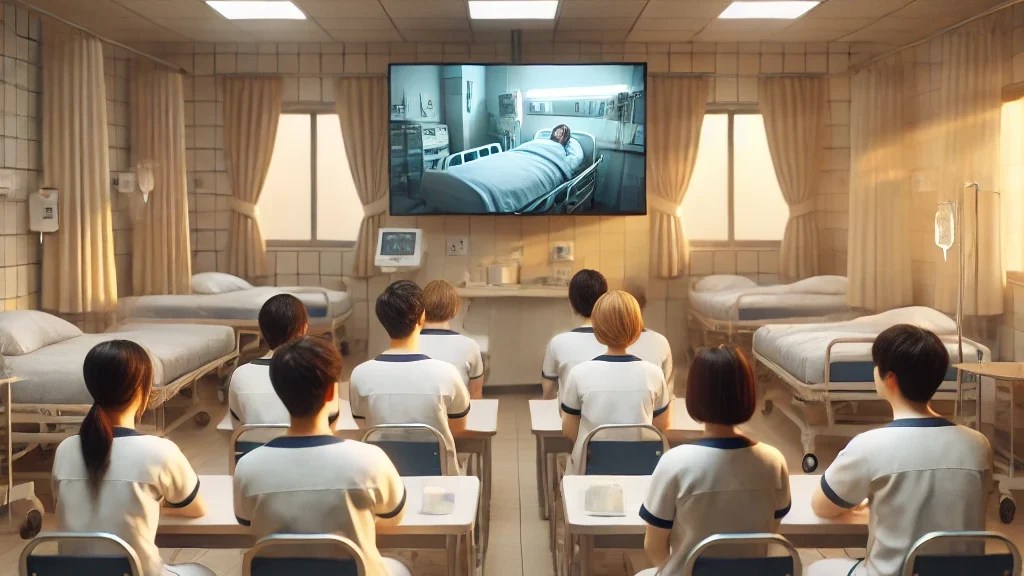
Each student designed a simulation scenario inspired by authentic clinical experiences, with a specific focus on non-technical skills. This allowed often-overlooked but essential competencies such as communication, professional judgement, and self-advocacy to be prioritised over clinical skills practice for the simulation activity. The Year 1 students, who had yet to undertake any clinical placements, were immersed in these scenarios and exposed to realistic challenges: navigating conversations with educators, engaging with the MDT, and managing the emotional rollercoaster of clinical environments.
In just one week, these scenarios were designed almost entirely independently by the second years, with only light-touch academic input focused on providing guidance, safeguarding learning outcomes and ensuring educational safety and appropriateness. That is a truly remarkable achievement. They not only created the content, but also facilitated the simulations, supporting each other in various roles, and bringing the scenarios to life with thought, compassion, and professionalism. The debrief sessions were led by experienced staff, but the true credit lies with the students, whose dedication to authenticity, peer support, and purposeful design was inspiring. I’ve rarely felt prouder in my role. Seeing these students design, deliver, and support such a meaningful experience, for their peers and for themselves, was a profound reminder of what education can and should be.
This is where the true spirit of Student as Producer came alive.
In designing simulation scenarios for first-year peers, our students weren’t just creating tasks — they were stepping into the role of educators, applying clinical reasoning, anticipating learning needs, and taking responsibility for shaping the pedagogical experience of others.
Reading Winn and Lockwood’s (2019) reflection on Student as Producer, it becomes clear that this model is not just about students producing teaching content, it’s about praxis: thoughtful, intentional action that transforms both the learner and the learning environment. These students weren’t just participating in a placement — they were actively shaping what learning looked like for their peers and I can’t commend them enough for their success.
I’m now really passionate to continue exploring Student as Producer in Simulation.
Neary, M. and Winn, J. (2009) The student as producer: reinventing the student experience in higher education.
Winn, J. and Lockwood, D. (2019) Student as Producer Is Hacking the University. In: Rethinking Pedagogy for a Digital Age. 3rd Edition New York: Routledge,.
Note: All simulation content was developed with the support of academic staff, and each scenario was reviewed and approved for educational and safety standards before delivery. Experienced faculty facilitated the debrief, and students were coached in best practices for safe simulation design. This was a low-risk, non-clinical teaching simulation focused on communication and professional behaviours, not clinical procedures.

 Dean Walker